
Choosing the Right Low-Air-Loss Mattress: What Families and Caregivers Need to Know

When a loved one develops a pressure injury or becomes increasingly immobile, families are often told they need a “low-air-loss mattress.”
But there is something important every family and caregiver should understand:
Not every low-air-loss mattress is the same, and the most expensive mattress is not automatically the right mattress.
Choosing an appropriate therapeutic support surface begins with understanding what is happening with the person who will actually be lying on it.
At CFS Medical Supplies & Equipment, we encourage families and healthcare professionals to look beyond the product name and consider the entire care situation.
Start With the Person — Not the Mattress
Before selecting a support surface, consider the individual’s current condition and functional abilities.
Can the person reposition independently? How many hours each day are they spending in bed? Do they currently have a pressure injury? Where is it located and how severe is it? Are moisture or incontinence concerns present? Is the person experiencing pain? Are there concerns with nutrition, weakness, sensation or mobility?
Another important question is:
Has this person had a pressure injury that healed and later returned?
Pressure injuries can recur when the underlying risk factors remain. A therapeutic mattress can be an important part of prevention and treatment, but it is not the entire solution.
Research continues to support looking at pressure-injury prevention comprehensively rather than relying on a mattress alone. A 2024 systematic review comparing alternating-pressure and low-air-loss modes in ICU patients found no statistically significant difference in pressure-injury occurrence between the two modes, reinforcing the importance of comprehensive prevention strategies.
What Does “Low Air Loss” Actually Mean?
The term “low air loss” is sometimes used broadly to describe powered air mattresses, but therapeutic surfaces can provide very different functions.
Some systems provide alternating pressure, periodically changing pressure within air cells.
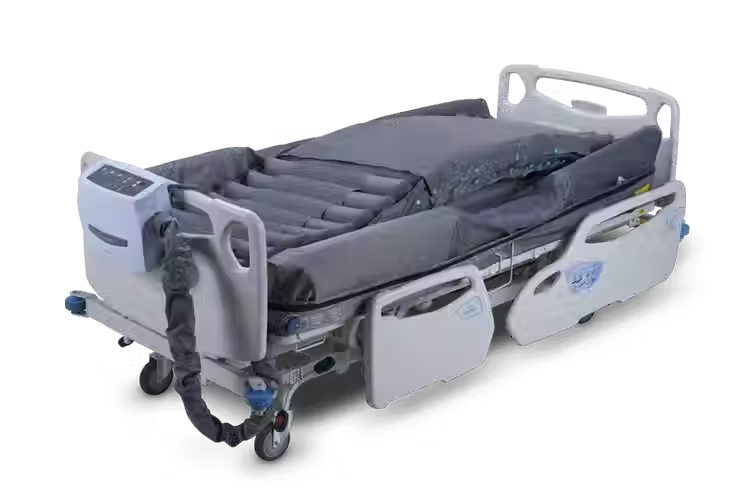
Low-air-loss systems use airflow as part of their therapeutic design and may assist with pressure redistribution and management of the microclimate around the patient.
More advanced systems may combine multiple therapeutic functions.
Medicare recognizes powered pressure-reducing mattresses that can incorporate technologies such as alternating pressure, low air loss or powered flotation. Coverage specifications for Group 2 powered pressure-reducing mattresses include requirements related to air-cell design, pressure reduction, prevention of bottoming out, friction and shear, and use on a hospital bed frame.
In other words, simply being told that something is an “air mattress” doesn't tell you enough.
How Do You Choose the Proper Surface?
The better question is:
What are we trying to accomplish for this particular person?
The answer might include:
Pressure redistribution
Moisture and microclimate management
Reducing friction and shear
Preventing bottoming out
Supporting an existing wound-treatment program
Assisting someone who cannot effectively reposition
Supporting positioning and caregiver interventions
A person who can reposition independently but is at risk for skin breakdown may need something very different from someone who spends most of the day in bed with advanced pressure injuries.
The surface should match the clinical and functional need, rather than choosing by price, brand or technology alone.
What About Advanced Lateral Rotation?
Some advanced therapeutic support surfaces incorporate lateral rotation or turning functions in addition to other pressure-management features.
For appropriately selected patients, these features may provide another tool for positioning and caregiver support.
CFS has seen advanced therapeutic surfaces with additional positioning capabilities become valuable options for families managing complex care situations.
However, advanced technology should never be viewed as a replacement for appropriate wound care, repositioning, nutrition, moisture management or clinical oversight.
The technology should support the care plan—not become the entire care plan.
Will Insurance Pay for the Low-Air-Loss Mattress Your Loved One Needs?
Sometimes. But this is where families can become frustrated.
The support surface a clinician or family would prefer and the support surface an insurance plan will cover are not necessarily the same thing.
Medicare has specific medical-necessity criteria for Group 2 support surfaces.
For example, coverage may apply when a beneficiary has multiple Stage 2 pressure ulcers on the trunk or pelvis that have failed to improve during the previous month despite a comprehensive treatment program, or when the beneficiary has large or multiple Stage 3 or Stage 4 pressure ulcers on the trunk or pelvis, among other qualifying circumstances.
Medicare's policy also emphasizes a comprehensive treatment program that can include regular assessment, turning and positioning, wound care, moisture/incontinence management and nutritional assessment and intervention.
Therefore, a prescription that simply says “low-air-loss mattress” does not automatically guarantee Medicare payment.
The medical documentation must support the applicable coverage requirements.
Families should also ask whether the specific therapeutic features being recommended are covered by their insurance plan and what private-pay options are available if the preferred technology isn't covered.
These conversations are much better to have before equipment is delivered rather than after an insurance denial.
Does Every Low-Air-Loss Mattress Fit Every Hospital Bed?
No.
This is an extremely important consideration that can easily be overlooked.
A therapeutic mattress and hospital bed should be evaluated as a system.
Compatibility considerations can include:
Bed deck dimensions • Mattress width and length • Mattress depth • Weight capacity • Bed articulation • Rail configuration • Mattress compression • Entrapment zones • Manufacturer requirements
A mattress measuring 36" × 80", for example, should not automatically be assumed to be appropriate simply because the bed deck is also described as 36" × 80".
The FDA has specifically addressed the relationship between mattresses, bed rails and entrapment risk. Mattress dimensions, depth, compressibility and surface characteristics can influence the gaps within a bed system. Specialty air mattresses can also affect these spaces as the mattress compresses or changes during use.
This is one reason families and facilities should be cautious about purchasing a therapeutic mattress without considering the bed it will be used on.
The Bed Frame Matters
A sophisticated therapeutic mattress cannot perform in isolation.
The bed frame must safely accommodate the mattress and the individual using it.
The bed's height and articulation can affect positioning, transfers and caregiver body mechanics. Mattress depth and compression can affect the relationship between the resident and the rails. The overall configuration can also affect caregiver access.
At CFS, we believe it is important to consider the complete sleep system:
Bed + Therapeutic Surface + Positioning + Caregiver Technique + Clinical Care Plan
Sometimes changing the mattress is appropriate.
Sometimes the entire sleep system deserves another look.
Why Can Pressure Injuries Return After Healing?
Healing a pressure injury does not necessarily mean the factors that contributed to it have disappeared.
If a person remains unable to reposition effectively, spends prolonged periods over vulnerable areas, experiences moisture or incontinence, has nutritional challenges, or continues to experience friction and shear, the underlying risk may remain.
This is why ongoing prevention matters even after a wound has healed.
Instead of asking only:
“How do we heal this wound?”
Families and caregivers should also ask:
“What can we change to help reduce the risk of this happening again?”
That conversation may involve the support surface, positioning schedule, seating surface, nutrition, skin monitoring, continence management, mobility, transfers and caregiver education.
12 Questions to Ask Before Choosing a Therapeutic Mattress
Before selecting a low-air-loss or other advanced support surface, consider asking:
What problem are we trying to solve?
What is the person's current skin and wound status?
Can the person reposition independently?
How many hours each day are they spending in bed?
Are moisture or incontinence concerns present?
Does the surface provide low air loss, alternating pressure, lateral rotation or a combination of technologies?
Is the mattress compatible with the existing bed frame?
How will the mattress interact with the bed's rails or assist devices?
Could mattress height or compression create a safety or entrapment concern?
What happens to the surface during a power failure?
What cleaning, maintenance and caregiver education are required?
What will insurance cover, and what options exist if the preferred surface isn't covered?
The Right Equipment Is Only Part of the Solution
At CFS Medical Supplies & Equipment, we believe advanced medical equipment should be selected by first understanding the person—not simply choosing a product number.
We work with patients, families, caregivers, facilities and healthcare professionals to help identify appropriate hospital beds, therapeutic support surfaces, seating and positioning products, and caregiver solutions.
Through CFS Solutions DBS Consulting, we also provide education and facility support designed to help caregivers understand not only what equipment they have, but how to use it safely and effectively.
Because the right equipment matters.
But understanding how and why to use it matters just as much.
Need Help Choosing the Right Bed or Support Surface?
Choosing a therapeutic mattress can feel overwhelming, especially when you're also managing wound care, mobility changes, insurance requirements and the day-to-day responsibilities of caregiving.
CFS Medical Supplies & Equipment is here to help.
We provide hospital and specialty beds, low-air-loss and advanced therapeutic support surfaces, seating and positioning solutions, mobility equipment, accessibility products, respiratory equipment, caregiver solutions and equipment education.
Have questions about a bed or therapeutic support surface?
Call CFS: 310-817-5373 CFS Medical Supplies & Equipment: cfsmedicalequipment.com CFS Solutions DBS Consulting & Education: cfssolutionsdbs.com
Download the FREE CFS Medical Supplies & Equipment App
Take CFS with you.
Our free CFS Medical Supplies & Equipment app gives patients, families, caregivers and healthcare professionals another convenient way to connect with CFS and explore our resources and solutions.
Download the CFS Medical Supplies & Equipment app FREE from the Apple App Store or Google Play Store.
Better Equipment. Better Education. Better Care.
This article is intended for educational purposes and is not a substitute for individualized medical, wound-care or rehabilitation advice. Insurance coverage and documentation requirements vary by payer and individual circumstances.


Comments